

Table of Contents
- Fabric Comparison Table: Custom Printed Shirts at a Glance
- Cotton Fabric: Softness, Breathability, and Print Performance
- Polyester Fabric: Durability, Moisture Management, and Sublimation
- Cotton vs Polyester Shirts for Printing: The Real Trade-Offs
- The Best Fabric for T-Shirt Printing by Method
- The Best Fabric for Sublimation Printing
- Blends, Tri-Blends, and Fabric Weight: What Changes the Feel
- Custom Printed Shirts for Bulk Orders: Choosing Fabric at Scale
- Frequently Asked Questions
Last Updated: October 18, 2026
Fabric Comparison Table: Custom Printed Shirts at a Glance
At Wild Doe Tee Co, every custom order has to survive real life: bachelorette weekends, baby showers, inside jokes that need to last. Below, we break down each fabric, where it wins, where it fails, and which printing method pairs with it.
| Fabric | Feel | Print Performance | Best Printing Method | Best For |
|---|---|---|---|---|
| 100% Cotton | Soft, breathable | Rich ink absorption, slight fade risk | Screen print, DTG | Everyday tees, gifts |
| Polyester | Smooth, durable | Vivid sublimation, no hand-feel | Sublimation, DTF | Performance wear, all-over prints |
| Cotton-Poly Blend | Balanced, low shrink | Good with most methods | Screen print, DTF | Bulk orders |
| Tri-Blend | Ultra-soft, drapey | Softer color payoff | Screen print, DTG | Fashion-forward groups |
| Cotton-Linen | Textured, airy | Limited detail | Simple screen print | Summer statement pieces |
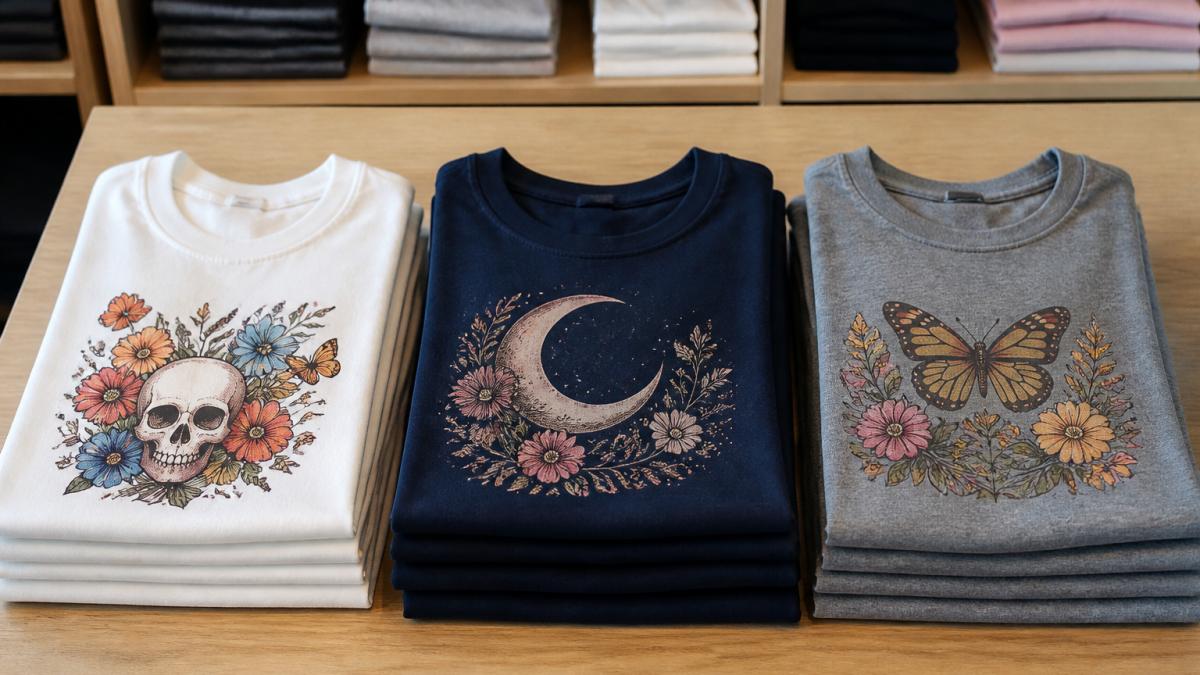
Cotton Fabric: Softness, Breathability, and Print Performance
Shrinkage: what to actually expect. Cotton shrinks because the fibers relax and swell during washing, then contract in the dryer. Most quality cotton blanks are pre-shrunk, but "pre-shrunk" does not mean "no shrink." A common pattern is roughly 3-5% shrinkage on the first hot wash and dry for a standard cotton tee, with most of that happening in length. If you order a run of shirts for a group, that can mean a full size of difference between a shirt washed hot and one washed cold. For gift tees and group orders where fit consistency matters, choose pre-shrunk blanks, wash cold, and hang dry, or tumble low. The Cotton Incorporated fabric care guidance covers how fiber structure affects wash behavior in more detail.
Where 100% Cotton Wins (and Where It Doesn't)
Cotton wins for gift tees, everyday wear, and business logo shirts. For a baby shower or birthday gift worn casually and often, cotton's softness and print clarity make it a great choice.
Polyester Fabric: Durability, Moisture Management, and Sublimation
Polyester is the print nerd's favorite for one reason: sublimation. The dye bonds into the fiber itself, so there's no raised layer on top, no cracking, no peeling, and color that stays vivid. It also handles moisture better than cotton, which is why performance wear leans on it. The trade-off is feel: some find polyester slick or static-prone, and it doesn't breathe like cotton.
Cotton vs Polyester Shirts for Printing: The Real Trade-Offs
- Cotton + screen print: bold, opaque color, softens with every wash
- Cotton + DTG: great for detailed, multi-color designs, best on light shirts
- Polyester + sublimation: permanent color, zero hand-feel, ideal for all-over prints
- Polyester + DTF: works on dark colors, holds up well, slight texture on top
The Best Fabric for T-Shirt Printing by Method
The best fabric for t-shirt printing depends on the method. Screen printing and DTG favor cotton. Sublimation requires polyester. DTF works on almost anything, which is why it's the go-to for mixed-fabric bulk orders.
Printing-Method-by-Fabric Compatibility Matrix
| Method | Cotton | Polyester | Blend | Tri-Blend |
|---|---|---|---|---|
| Screen Print | Excellent | Good | Excellent | Good |
| DTG | Excellent | Fair | Good | Good |
| Sublimation | Not suitable | Excellent | Fair | Fair |
| DTF | Excellent | Excellent | Excellent | Excellent |
| Vinyl/HTV | Good | Good | Good | Fair |
The Best Fabric for Sublimation Printing
The best fabric for sublimation printing is polyester, ideally high polyester content with a smooth, tight knit. The dye turns to gas and bonds into the fiber, so the higher the polyester percentage, the more vivid and permanent the result. Cotton doesn't work because the dye has nothing to bond to, it washes straight out, and high-cotton blends produce washed-out results. For matching group shirts for a trip or event, sublimation on polyester is a smart pick: the print won't fade, crack, or peel, and it handles all-over prints and photo-style designs best.
Blends, Tri-Blends, and Fabric Weight: What Changes the Feel
Matching weight and blend to the use case. For business logo shirts worn weekly, a mid-weight 50/50 or 60/40 cotton-poly blend with a fine-gauge knit prints cleanly and holds up. For a trendy gift set or boutique-style group shirt, a mid-weight tri-blend delivers the soft, drapey look, just avoid the lightest options if the shirt will be worn often. For summer event tees, a lightweight cotton or cotton-poly blend works if the design doesn't require maximum opacity.
Custom Printed Shirts for Bulk Orders: Choosing Fabric at Scale
Custom printed shirts for bulk orders come down to consistency: a fabric that holds its color through washing, and fits the same way across sizes.

For bulk orders, we recommend:
- Mid-weight cotton or cotton-poly blend
- Pre-shrunk fabric to avoid size surprises after the first wash
That's why our Teeshirt- Vintage Desert Dreamer and other everyday tees are built on comfortable, wearable fabric that handles print well and holds up to repeat wear. For group orders, matching sets, or business logo shirts, our Sweatshirt or Teeshirt - Lash Boss is a solid pick because we can print your logo in any color to match your theme.


Planning a bachelorette party, shower, or group event and want shirts that feel as good as they look? We'll help you pick the right blank and print method. Shop Wild Doe Tee Co and let's make something your group will actually wear again.
Frequently Asked Questions
What fabric is best for custom shirt printing?
For custom shirts, the best fabric depends on comfort and budget. Cotton feels soft and breathable. A cotton-polyester blend offers a good balance of durability and comfort.
Is 100% cotton or a cotton-polyester blend better for printed shirts?
100% cotton feels softer and breathes better. A cotton-polyester blend resists shrinking and wrinkling more, which helps when you order custom printed shirts for bulk orders. For everyday wear, cotton wins on feel. For event shirts that need to survive repeated washing and travel, the blend often lasts longer.
Which fabric works best for sublimation printing?
For vibrant, long-lasting designs, polyester is a great choice. It helps colors stay true and resist fading.
Do printed designs look better on cotton or polyester?
Cotton offers a soft feel and rich, saturated color. Polyester can provide sharp detail. On light-colored garments, both can look clean.
How do you choose fabric for custom shirts in bulk?
Consider the wearer and the occasion. For a bachelorette or baby shower, soft cotton or a tri-blend feels best in photos and on skin. For business logos, a cotton-polyester blend holds shape and resists fading.