

Table of Contents
- Why Bringing Customer Creativity to Life Sets Wedding Services Apart
- A Repeatable Process for Turning Ideas Into a Deliverable Wedding Plan
- Custom Wedding Design Ideas That Start With the Couple's Story
- Personalized Bachelorette Party Shirts That Feel One-of-a-Kind
- Custom Apparel for Group Orders: Sizing, Consistency, and Timing
- Personalized Wedding Party Gifts That Go Beyond the Generic
- Budget-Aware Creative Problem-Solving and Measuring Whether the Vision Landed
- Conclusion
- Frequently Asked Questions
Last Updated: October 17, 2026
Why Bringing Customer Creativity to Life Sets Wedding Services Apart
Every couple has a vision.
At Wild Doe Tee Co, we build our custom creation services around exactly that. A vague idea in a customer's head is our starting point, not a problem to work around.
Here's the truth most guides skip: couples don't remember the timeline spreadsheet. They remember the shirt their best friend wore all weekend.
According to IBISWorld's wedding services industry overview, personalization and one-of-a-kind details are a growing driver of customer satisfaction in wedding services. Couples want something that couldn't belong to anyone else.
Below, we'll walk through a repeatable process for turning ideas into a real plan, plus the custom pieces that make a wedding feel like theirs.
A Repeatable Process for Turning Ideas Into a Deliverable Wedding Plan
A repeatable process beats inspiration every time. When you run the same four stages for every couple, you stop guessing and start delivering. Most guides stop at "listen and collaborate." The workflow below is the one we'd actually run, with the tools and checkpoints that keep a vague idea from turning into a late-stage surprise.
Stage 1: Structured Discovery
Start with questions, not sketches. Ask the couple what they want guests to feel, not just what they want to see.
Use a short pre-meeting questionnaire:
- Three words that describe your wedding
- The one detail you'd regret skipping
- What your friend group jokes about (inside jokes are gold)
- What you don't want under any circumstances
- Which three people will be in the photos most often
That last question matters more than it looks. The people in the photos are the people wearing the custom pieces, so their comfort and style should shape the design from day one.
A common pattern among experienced vendors is to run discovery in two passes: a written questionnaire first, then a 30-minute vision call. The questionnaire surfaces the raw material; the call tests whether the couple actually agrees with each other. When partners give different answers to "the one detail you'd regret skipping," that's the conversation to have now, not three weeks before the event.
Stage 2: Shared Mood Board and Written Design Brief
Turn answers into a single page. A mood board of colors, textures, and photos plus a short brief keeps everyone on the same page.
The brief should cover:
- The story behind the design
- Colors and style direction
- Where each item will be used (and by whom)
- Quantity and size breakdown for group items
- Who approves the final version
- The hard deadline the items must be in hand
Stage 3: Feasibility and Budget Checkpoints
Before any design work goes deep, run a feasibility pass. This is the step most guides skip, and it's where projects go sideways.
Ask three questions for every idea:
- Can it be produced at the quantity needed?
- Does the timeline allow it? Custom work needs design time, proof time, and production time. Work backward from the event date and mark the last safe order date.
- Does it fit the budget priority? Pick two or three "hero" details that carry the most meaning and simplify everything else.
When an idea fails a check, don't kill it, reframe it. A full custom illustration can often be reframed into a simplified icon that captures the same inside joke. That reframing conversation is where a good custom partner earns trust.
Stage 4: Approval Checkpoints Before Production
Lock in two or three checkpoints. One after the concept, one after the design draft, one before the order goes out.
Each checkpoint needs a named approver and a deadline. Without that, revisions drag and delivery dates slip.
| Stage | What Happens | Who Signs Off | When |
|---|---|---|---|
| Discovery | Questionnaire and vision call | Couple | First week |
| Design brief | Mood board and written brief | Couple | Second week |
| Feasibility check | Quantity, timeline, and budget review | Couple and vendor | Before design |
| Concept draft | First design pass | Couple | Mid-planning |
| Final proof | Last look before production | Couple | Before order |
Run these four stages in order and the couple's scattered ideas become a plan you can actually produce, on time, without the scramble.
Custom Wedding Design Ideas That Start With the Couple's Story
The best custom wedding design ideas come from the couple, not a trend board. Ask what makes them them, then build the design around that answer.
Try these starting points:
- Inside jokes printed on the back of a shirt
- A pet's silhouette worked into a small design
- A shared hobby turned into a simple icon
- A favorite song lyric in a hand-lettered style
- A hometown or meeting-place reference
What most guides miss is the follow-through. Making it look good on a shirt or a gift box takes a designer who listens and a proof you can approve before anything gets made.
Personalized Bachelorette Party Shirts That Feel One-of-a-Kind
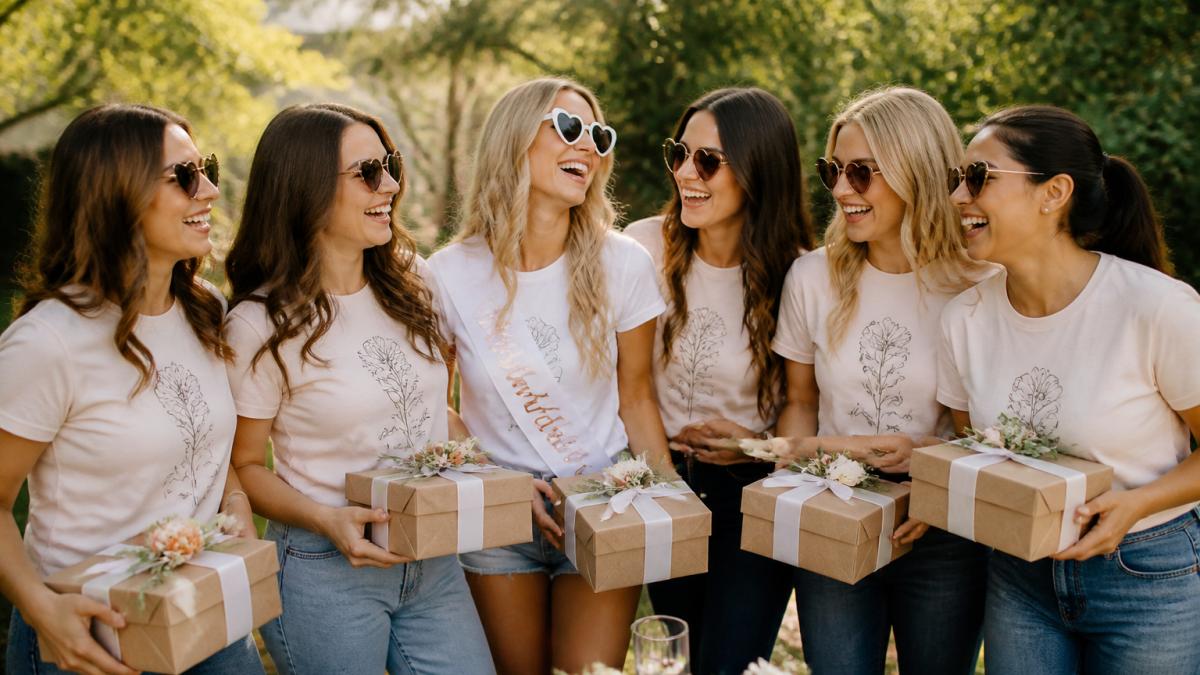
Personalized bachelorette party shirts work best when they feel like the group, not a catalog. Matching sets are fun, but the details are what make them stick.
A few ways to get there:
- Nicknames or inside jokes on each shirt
- One shared design with a small personal touch per person
- Colors that match the bride's palette
- A date or location worked into the art
Sizing is where group orders go sideways. Collect sizes early, ask for a backup size on the most common fit, and confirm everything before production.
That's the whole point of custom apparel for group orders: everyone feels included, not squeezed into a size that was never theirs.
Custom Apparel for Group Orders: Sizing, Consistency, and Timing
Custom apparel for group orders lives or dies on three things: sizing, consistency, and timing. Get those right and the rest is easy.
Sizing. Send a size chart, not a guess. Ask each person to confirm their size in writing, and note that fit can vary by style.
Consistency. Every shirt in a group order should look like it came from the same batch. Same design, same placement, same colors. Small variations read as mistakes.
Timing. Start earlier than feels necessary. Custom work needs design time, proof time, and production time. If a party is a few weeks out, reach out right away and ask what's realistic for the date.
When you plan the timeline backward from the event, everyone gets what they need without the scramble.
Personalized Wedding Party Gifts That Go Beyond the Generic
Personalized wedding party gifts should feel chosen, not bulk-bought. The goal is a gift the person actually keeps.
Skip the generic tote with a name slapped on it. Instead, think about the person:
- A shirt in their style, not just the wedding colors
- A small accessory that matches their everyday look
- A curated gift box built around one thoughtful theme
- Something tied to a shared memory with the couple
A curated gift box is one of the easiest ways to make a gift feel personal. Pick a theme, add one custom item, and finish with a small note in the couple's own words.
Budget-Aware Creative Problem-Solving and Measuring Whether the Vision Landed
Budget doesn't kill creativity. It just forces better choices. Most guides treat budget as a constraint to apologize for; the better approach is to treat it as a design brief of its own.
The Trade-Off Framework
Start by ranking every custom idea on two axes: meaning (how much it matters to the couple) and reach (how many people experience it). Then spend where both are high.
A simple approach:
- Pick two or three "hero" details that carry the most meaning and put the budget there
- Keep everything else clean and simple
- Spend on the pieces people touch and keep, apparel, gifts, keepsakes
- Simplify the items that get tossed after the event
When an idea is high-meaning but high-cost, look for a lower-cost version that keeps the meaning. A full custom illustration can often become a simplified icon. A curated gift box with one standout custom item and a handwritten note is also a great option. The meaning survives; the spend drops.
Measuring Whether the Vision Landed
A great experience isn't purely subjective. Define a few indicators before the event so you can tell whether the vision was delivered, not just whether the order shipped.
Useful indicators:
- Satisfaction at delivery, did the couple's reaction match the brief?
- Revision frequency, how many rounds did it take to get approval? High counts signal a discovery gap.
- On-time delivery, were items in hand before the deadline in the brief?
- Reuse and referral intent, would the couple and wedding party wear or use the pieces again, and would they recommend the service?
After the wedding, ask the couple and the wedding party a few quick questions:
- Did the custom pieces feel like you?
- Would you wear or use them again?
- What would you change?
Those answers tell you more than any survey. They show whether the vision actually landed, and they feed directly back into the next couple's discovery stage.
For couples planning now, the safest move is to start the custom conversation early. Share the idea, even if it's half-formed. A good custom partner can help shape it from there, and can tell you which version of the idea fits the budget without losing what made it yours.
Conclusion
Turning a couple's scattered ideas into real, wearable, giftable pieces takes a process, not luck. Start with discovery, lock in approvals, and plan the timeline backward from the event.
That's what we do at Wild Doe Tee Co. Our custom creation services turn vague ideas into one-of-a-kind apparel, and our curated gift boxes make every celebration feel personal. We handle the design help, the sizing questions, and the details that make a group order feel effortless.
Ready to bring your idea to life? Shop Wild Doe Tee Co and start with the piece that feels most like you.
Frequently Asked Questions
How do you turn a customer's wedding idea into a custom design?
Start with a structured discovery conversation about the couple's story, colors, and non-negotiables. Collect reference images, then translate them into a mood board and a short written design brief. Before any production, confirm a digital mockup with the customer. This checkpoint approach keeps the final wedding services deliverable aligned with what the couple actually pictured, rather than what a vendor assumed.
What personalized apparel makes a thoughtful wedding party gift?
Personalized wedding party gifts work best when they reflect the recipient, not just the wedding theme. Custom tees or sweatshirts with inside jokes, nicknames, or a shared phrase feel more personal than generic bridesmaid items. Add a small curated gift box with a candle or accessory for a complete package. Collect sizes in advance and confirm the design with the group so everyone gets something they will actually wear again.
How can a wedding party coordinate custom shirts or sweatshirts?
Choose one design and one color palette, then set a single order deadline so production runs together. For group orders, confirm sizing with a measurement guide rather than guessing, and request a sample or digital mockup first. This keeps the group looking coordinated while still feeling individual.
What details should you collect before creating custom wedding apparel?
Gather the event date, group size, individual sizes, color preferences, design references, and any text or inside jokes to include. Also clarify the delivery address and deadline. A short questionnaire covering these points prevents most revision cycles and last-minute surprises.