

Table of Contents
- Why Non-Mass-Produced Apparel Wins for Custom Prints
- High-Quality Custom Apparel Sourcing: What Actually Matters
- Custom Falala Sweatshirt Design Ideas That Feel Personal
- Best Practices for Custom Apparel Quality Control
- Pricing Breakdown: What You Pay For and Why It's Worth It
- Ethical Labor and Supply Chain Transparency
- How to Choose the Right Non-Mass-Produced Apparel for Your Event
- Conclusion
- Frequently Asked Questions
Last Updated: October 4, 2026
Why Non-Mass-Produced Apparel Wins for Custom Prints
If you have pulled a custom tee out of a big-box order and felt the print crack after two washes, you understand why non-mass-produced apparel matters.
Mass-produced blanks are cut to hit a price point, not a standard: thinner, blended for cheap drape, and printed in runs so large nobody inspects individual pieces. Small-batch production flips that, at the cost of higher prices and longer timelines.
High-Quality Custom Apparel Sourcing: What Actually Matters
High-quality custom apparel sourcing means selecting blanks, threads, and print methods that hold up to repeated wear while matching a design intent. Get sourcing wrong and no design talent saves the finished piece.
Most buyers obsess over the design file, but the blank and decoration method decide whether that design survives the first ten washes. If you want apparel that does not look like everyone else's catalog tee, the blank is your biggest lever.
Textile Sourcing and Blank Quality
Blank quality is the foundation. A heavier, tighter-knit garment holds embroidery and direct-to-garment ink far better than a thin, loose weave, and keeps its shape after washing instead of stretching at the neckline.
A common mistake is judging a blank by how soft it feels in the bag. Softness often comes from a looser knit or synthetic blend, the exact fabrics that pill, sag, and let print edges lift.
Beyond Standard Cotton: Niche and Non-Mass-Produced Textiles
If you want apparel that genuinely does not look like a mass-produced catalog item, the blank itself has to be non-standard. Four categories are worth knowing:
- Hemp blends. Hemp fiber is durable, breathable, and gets softer with wear. It takes embroidery well and holds shape better than most cotton blends. The trade-off is cost, hemp blanks run higher per unit than comparable cotton, and color options are narrower.
- Bamboo and bamboo-cotton blends. Bamboo has a distinctive drape and a cool hand feel that reads as premium. It takes direct-to-garment ink cleanly. The trade-off is that bamboo can be more prone to shrinkage, so wash-testing matters more, not less.
- Deadstock and overrun fabric. Deadstock is leftover fabric from mills and larger brands, often high quality, often in limited quantity, and almost never restockable. This is the closest thing to a guaranteed non-mass-produced blank: if you make 40 pieces from a deadstock roll, there are no more. You cannot reorder, so size runs and color consistency require planning.
None of these are automatically better than a good ringspun cotton tee, they are different tools. If "unique, non-mass-produced" is the goal, the blank is where you claim it, not the design file.
Small-Batch vs. Print-on-Demand Hybrid Models
Pure print-on-demand keeps inventory at zero, but you inherit whatever blank the partner stocks and rarely see the print before your customer does. Pure bulk gets better unit pricing, but leaves unsold sizes if headcount shifts.
A common pattern for a small brand: buy 25 to 50 blanks in your two best-selling colors and sizes, decorate to order, and reorder as inventory drops.
Custom Falala Sweatshirt Design Ideas That Feel Personal
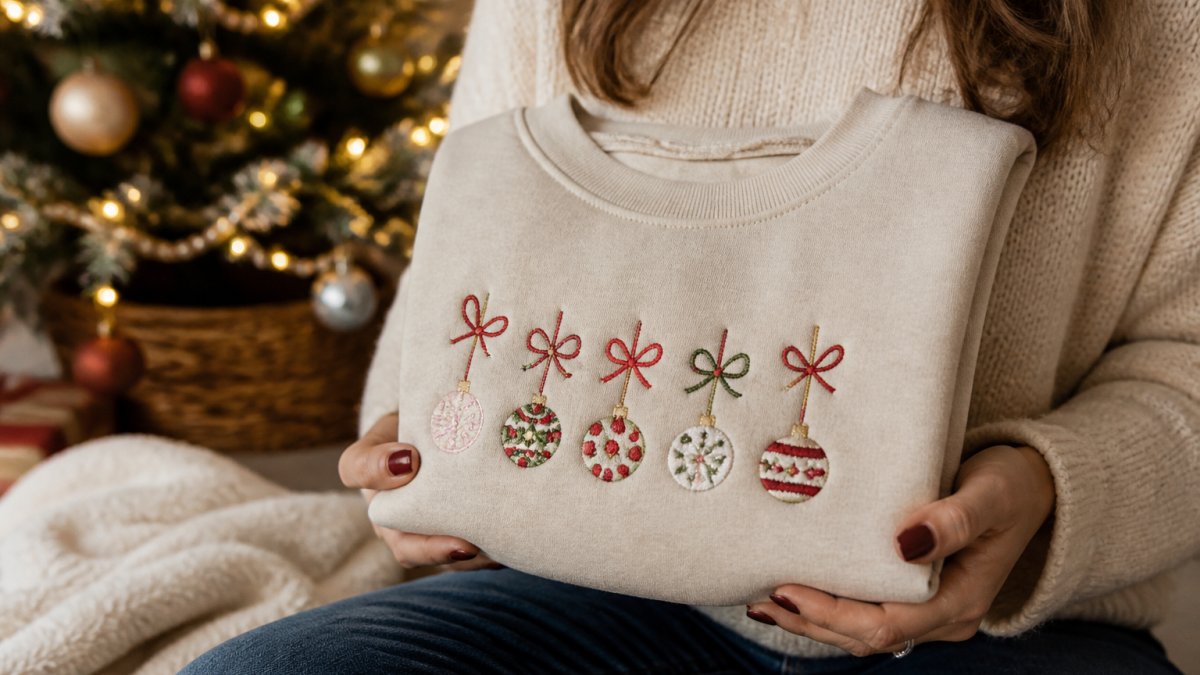
A custom falala sweatshirt works best when the design comes from something only your group would recognize.
Start with the phrase or symbol your friend group already repeats, then decide how it should be applied, that choice changes both the look and the lifespan.
Embroidery vs. Direct-to-Garment vs. Sublimation
Each decoration method suits a different design and a different garment.
- Embroidery: best for logos, short phrases, and small motifs. Thread will not crack or fade, and it adds a premium feel. Our Embroidered Sweatshirt - Dog Mama is a good example of a simple design that carries personal meaning.
- Direct-to-garment: best for detailed, multi-color artwork on cotton. It prints fine gradients and small text well, but it sits on top of the fabric and needs careful washing.
- Sublimation: best for all-over print on light polyester. It bonds into the fabric so it never peels, but it will not work on dark cotton.
| Method | Best For | Durability | Works On |
|---|---|---|---|
| Embroidery | Logos, short phrases, small motifs | Excellent, no fading or peeling | Most fabrics, especially knits |
| Direct-to-garment | Detailed multi-color artwork | Good with careful washing | Cotton and cotton blends |
| Sublimation | All-over print, light garments | Excellent, bonds into fabric | Light polyester only |
Best Practices for Custom Apparel Quality Control
Best practices for custom apparel quality control start with inspecting the blank before decoration, not the finished piece after. Catching a flawed garment early saves the whole order.

Run through this checklist before anything goes to the machine:
- Check the blank for crooked seams, uneven hems, and pulled threads
- Confirm the size tag matches the actual measurements
- Test the design file at full size for legibility
A wavy design after washing is usually a stabilization issue, not a thread issue. Pressing it with a cloth over the top smooths it back out, which is why care instructions matter as much as production.
Pricing Breakdown: What You Pay For and Why It's Worth It
A custom piece costs more than a rack tee because you pay for the blank, the decoration, the labor, and the quality checks a bulk retailer skips. Understanding the line items makes the price make sense, and shows where a seller cuts corners when a quote looks suspiciously low.
Here is how a small-batch custom order breaks down, using our own catalog as the reference:
| Item | What You're Paying For | Example Price |
|---|---|---|
| Basic custom tee | Quality blank, single design application | $30.00 |
| Embroidered sweatshirt | Middle-weight blank, commercial embroidery | $36.00 |
| Embroidered patch | In-house design, embroidery, iron-on backing | $6.40 to $6.80 |
| Embroidered canvas tote | Heavyweight canvas, embroidered design | $22.00 to $35.00 |
The Four Cost Drivers Behind Every Custom Piece
Every quote, from us or anyone else, is built from the same four inputs. Knowing them lets you compare apples to apples instead of sticker price to sticker price.
Sweatshirt or Teeshirt - Lash Boss →
- The blank. A 4.5 oz. ringspun cotton tee and a 6.5 oz. heavyweight cotton tee can differ by several dollars per unit at wholesale. Heavier, tighter-knit blanks cost more because they use more fiber and take longer to sew. This is the biggest swing factor in most quotes.
- The decoration method. Embroidery is priced by stitch count, so a 3,000-stitch logo and a 12,000-stitch design are not the same job. Direct-to-garment is priced by print size and ink coverage. Sublimation is priced by panel size on polyester. A seller who quotes one flat rate for "a design" is either averaging across jobs or cutting stitch counts to hit the number.
- The labor. Small-batch means someone hoops each garment, checks registration, trims threads, and folds the finished piece. That is minutes per unit that a mass producer spreads across thousands of units. It is the reason a small-batch tee is not $12.
- The quality checks. Wash-testing a sample, photographing an approved piece, and matching every finished unit to that photo takes time. It is also the reason your order does not arrive with three shirts that look slightly different from the other nine.
Why Print-on-Demand Looks Cheaper (And When It Isn't)
Print-on-demand quotes often land lower per unit than small-batch because the fulfillment partner buys blanks at massive volume and prints on demand with no inventory risk to you, a real advantage for a solo creator testing a design.
The catch is what you give up: you cannot choose the blank beyond what the partner stocks, you rarely see the print before your customer does, and the per-unit price does not fall with volume the way bulk does.
The Hybrid Math
A hybrid model, hold a small inventory of blanks you trust, decorate to order, splits the difference: wholesale blank pricing, control over decoration, and you only decorate what has sold.
For a group order of 12 to 20 pieces, the hybrid approach usually beats both pure POD (better blank, better QC) and pure bulk (no unsold sizes).
If you are comparing a $30 custom tee to a cheap multi-pack, you are not comparing the same product.
Ethical Labor and Supply Chain Transparency
Transparency in the supply chain means knowing who made the blank, who decorated it, and where.
Small-batch production shortens that chain by design: when a maker sources blanks, decorates in-house, and ships directly, there are fewer anonymous steps between fabric and customer.
Our own patches are designed, created, and embroidered in-house. That is the level of transparency we would want as a buyer, so it is the level we hold ourselves to.
How to Choose the Right Non-Mass-Produced Apparel for Your Event
Choosing the right piece comes down to matching the garment and decoration to the occasion, the timeline, and the people wearing it. Get those three aligned and the order practically designs itself.
Work through this decision framework:
- If it's a bachelorette or shower: pick a lightweight tee or a tote, keep the design bold and readable in photos.
- If it's a birthday gift for one person: choose an embroidered sweatshirt with a personal detail, like a name or a pet.
- If it's a group of eight or more: confirm sizing early and order one sample first.
Turnaround matters: our embroidered pieces run one to two weeks in production, then two to three business days in standard shipping, so a three-week window is tight but workable for a small group.
Conclusion
The hard part of custom apparel is not the design, it is finding a maker who treats a small order like it matters. Mass-produced blanks and anonymous fulfillment will always be cheaper, and they will always show it after a few washes.
At Wild Doe Tee Co, we build personalized apparel and accessories in small batches, from embroidered sweatshirts and tees to canvas totes and hand-embroidered patches, all designed and finished in-house.

Frequently Asked Questions
How do I know the print quality won't fade or crack after a few washes?
Embroidery is the most durable option because the design is stitched with thread rather than printed on top of the fabric. It won't fade or peel. For printed designs, look for direct-to-garment or sublimation methods that bond with the fabric. Always wash inside out on warm with like colors and tumble dry low. Wild Doe Tee Co's embroidered sweatshirts use high-quality thread and a commercial embroidery machine, so the design holds up wash after wash.
What's the turnaround time for custom orders if I have an event in three weeks?
Production time for Wild Doe Tee Co's embroidered items is 1-2 weeks, followed by standard shipping of 2-3 business days. Planning ahead by two to three weeks gives you a comfortable buffer for any adjustments.
I'm not artistic. Can you help me design something from a vague idea?
Yes. Wild Doe Tee Co offers custom creation services that bring your ideas to life even if you only have a rough concept. You can describe the vibe, colors, or inside joke, and the team will translate it into a design. For business logos, they'll match your brand colors on tees or sweatshirts. Just send a DM or email with your idea, and they'll work with you to create something personal.
Your prices seem higher than basic tees from a big retailer. What am I paying for?
You're paying for small-batch production, hand-embroidered details, and items that aren't mass-produced. A Wild Doe Tee Co embroidered sweatshirt starts at $36, while a basic mass-produced tee might cost $10. The difference is in the materials, the commercial embroidery process, and the fact that your item is made to order. You get a unique piece that won't be worn by hundreds of other people.
How do you handle sizing, and what if something doesn't fit?
Because items are made to order, it's best to check the size chart before ordering. For group orders like bachelorette parties, collect sizes from everyone first.
Can I order something really niche, like an inside joke for my friend group?
Absolutely. Wild Doe Tee Co specializes in personalized, non-mass-produced items. You can request custom embroidered patches, personalized names on patches, or fully custom apparel designs. Whether it's a specific phrase, a pet's name on a sleeve, or a themed design for your tribe, the team works with you to create something that feels personal. Just share your idea and they'll make it happen.